

Loader Equipment Solutions
Streamline your production process with loaders from BAK Food Equipment, designed for efficient and ergonomic handling of ingredients and products.
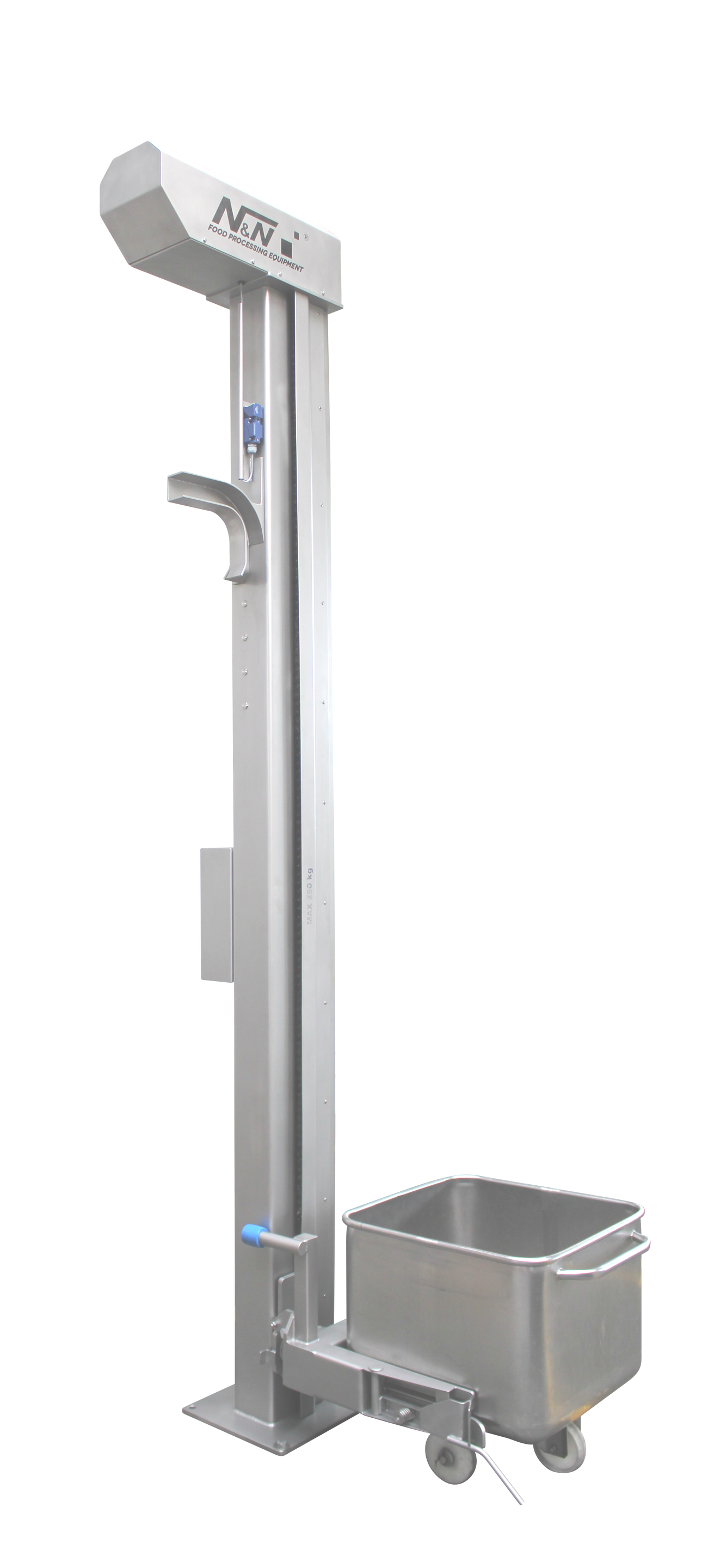

Overview of Loader Equipment Solutions
What are loaders and why are they used in food processing environments?
Loaders are specialized equipment designed to automate the lifting, tilting, and dumping of ingredients or products within food processing facilities. By mechanizing these tasks, loaders significantly reduce the need for manual labor, which not only improves workplace safety but also enhances ergonomics for operators. In food processing environments, loaders are essential for efficiently transferring heavy or bulky materials—such as meat, poultry, seafood, alternative proteins, and bakery ingredients—between different stages of production. This automation helps maintain a clean, organized workflow and supports compliance with food safety standards.
How do loaders support efficiency and ergonomics?
Loaders streamline production by enabling quick and consistent transfer of ingredients into mixers, grinders, tumblers, and other equipment. This automation minimizes manual handling, reducing the risk of operator injury and fatigue, and supports ergonomic lifting solutions. Overall, the use of ingredient transfer equipment and batching and feeding automation further enhances overall plant efficiency and throughput.
What types of loaders does BAK offer?
BAK Food Equipment offers a comprehensive range of loader solutions tailored to the needs of the food industry. The two primary types are Column Loaders (Series PW) and Combo/Buggy Swing Loaders (Series PZ). Column Loaders are ideal for vertical lifting and dumping standard and non-standard containers into equipment such as mixers and grinders, providing a reliable and hygienic solution for ingredient transfer. Combo/Buggy Swing Loaders are designed for versatility, accommodating various container types and sizes, making them suitable for use with tumblers and other equipment. Both types are constructed from stainless steel for durability and easy sanitation. BAK’s partnership with N&N Nadratowski ensures that these loading systems for food processing are seamlessly integrated into larger automated production lines, supporting ergonomic material handling and efficient ingredient flow throughout the facility.
Column Loaders (Series PW)
What are Column Loaders used for?
Column loaders, such as the Series PW from BAK Food Equipment, are designed to streamline the lifting and transfer of heavy ingredients and products within food processing environments. These loaders are essential for moving standard 400/600 lb bins, barrels, crates, and even custom containers, making them a versatile solution for ingredient lifting and ergonomic bin handling. With a maximum lifting capacity ranging from 838 to 2205 lbs, Series PW column loaders are well-suited for a wide range of industrial food processing applications, reducing manual labor and improving workplace safety.
What makes the Series PW design flexible across industries and applications?
The Series PW column loaders are engineered for flexibility, accommodating a variety of container types and sizes, including those specified by DIN9797 standards. Their robust design allows for integration into different production lines, whether as standalone units or paired with other BAK machinery. The loaders can be equipped with accessory add-ons such as funnels and strainers, which are particularly useful for handling liquids and semi-solid products. This adaptability ensures that the Series PW can meet the unique needs of diverse food processing operations, from meat and poultry to bakery and prepared foods.
What safety and customization features do they offer?
Safety is a top priority in the design of Series PW column loaders. Key safety components include a galvanized chain for reliable lifting, a mechanical safety brake to prevent accidental drops, and a stable lifting frame to ensure secure operation. For enhanced sanitation and compliance, the loaders are constructed from food-safe stainless steel and feature IP-rated components, making them easy to clean and maintain. Customization options extend to control integration, with the ability to operate via combined HMI controls when paired with other BAK equipment or through standalone button-panel controls. These features, along with easy-clean access points, make the Series PW column loaders a safe, hygienic, and user-friendly choice for modern food processing facilities.
Combo/Buggy Swing Loaders (Series PZ)
What distinguishes swing loaders from column loaders?
Swing loaders, such as the Series PZ from BAK Food Equipment, are uniquely designed to provide a pivoting or swinging motion during the lifting process. Unlike column loaders, which raise containers vertically and discharge product, swing loaders work more horizontally, ideal for directing ingredients or products into tumblers, conveyors, or other pieces of equipment, enhancing flexibility and efficiency in food processing environments. The ergonomic transfer system of swing loaders reduces manual handling and improves workplace safety.
What containers can the Series PZ handle?
The Series PZ swing loaders are engineered to accommodate a wide range of standard containers, including 400/600 lb carts, combo bins, and crates. For operations utilizing non-standard containers, BAK Food Equipment offers customization options to ensure compatibility and seamless integration into existing workflows. This versatility makes the Series PZ a reliable choice for diverse food processing applications requiring robust and adaptable ingredient lifting equipment.
Which applications benefit most from a swing-loader configuration?
Swing-loader configurations are particularly beneficial in applications where infeed is closer to the ground. The Series PZ can be equipped with accessories such as funnels and strainers for specialized material handling, further expanding its utility. Built with a durable stainless steel assembly, the loader features simple on-machine button controls and is designed for easy cleaning, making it well-suited for demanding food processing environments where hygiene and efficiency are paramount. Swing loaders, also known as combo bin lifters, or automated ingredient loading systems, are beneficial for operations of all sizes.
How Loaders Integrate Into Production Lines
How do loaders connect to mixers, grinders, tumblers, or conveyors?
Loaders from BAK Food Equipment are engineered to seamlessly connect with a wide range of processing equipment, including mixers, grinders, tumblers, and conveyors. Integration is achieved through custom discharge heights, ensuring that the loader’s output aligns precisely with the infeed of the receiving equipment. This alignment is critical for smooth ingredient transfer and to prevent spillage or product loss. Loaders can be equipped with HMI controls, allowing operators to synchronize loader operation with the rest of the production line for automated, hands-free ingredient delivery. Infeed and outfeed alignment is tailored to the specific requirements of each production environment, supporting compatibility with BAK tumblers, mixers, emulsifiers, and other industrial systems.
What options support mobile, stationary, or height-adjustable configurations?
BAK Food Equipment offers loaders in a variety of configurations to suit different production needs. Mobile frames allow loaders to be easily moved between workstations or production lines, providing flexibility for facilities with changing layouts or multiple processing areas. Stationary loaders are ideal for dedicated lines where consistent placement is required. Height-adjustable options are available to accommodate varying equipment heights or to support different batch sizes, ensuring ergonomic ingredient handling and efficient transfer regardless of the receiving vessel’s dimensions. These options help facilities optimize their space and adapt to evolving production demands.
Why is integration important for workflow optimization?
Effective integration of loaders into production lines is essential for optimizing workflow and maximizing efficiency. By automating the transfer of ingredients and products, loaders improve batch consistency through precise, repeatable delivery. This reduces manual handling, minimizes the risk of operator error, and supports consistent product quality. Integrated loaders also enhance production workflow efficiency by reducing downtime between batches and streamlining ingredient handling systems. The result is improved batching accuracy, reduced labor requirements, and a safer, more ergonomic working environment. Incorporating BAK Food Equipment loaders into your line automation strategy ensures that ingredient lifting and transfer are reliable, consistent, and tailored to your facility’s needs.
Safety, Hygiene, and Compliance Advantages
What safety standards do loaders support?
BAK Food Equipment loaders are engineered with robust safety features to meet the rigorous demands of food processing environments. Reinforced galvanized lifting chains, mechanical safety brakes, and rigid lift columns are standard, ensuring reliable operation and minimizing the risk of equipment failure. These features support compliance with food processing safety systems and OSHA ergonomic compliance standards, providing peace of mind for facility managers and operators alike.
How do loaders help reduce ergonomic strain?
Manual lifting of heavy bins—often weighing between 400 and 600 pounds—poses a significant risk of worker injury. BAK Food Equipment loaders are designed to eliminate this hazard by automating the lifting and transfer process. By removing the need for manual handling, these loaders play a critical role in worker injury prevention, reducing ergonomic strain and supporting a safer, more productive workplace.
What sanitation features matter in USDA and FDA environments?
Sanitation is paramount in USDA and FDA-regulated facilities. BAK Food Equipment loaders feature stainless-steel construction, sloped surfaces, open frames, and accessible cleaning points, all of which are essential for maintaining hygienic operations. These design elements facilitate thorough cleaning and prevent the buildup of contaminants. Additionally, loaders integrate seamlessly with washers, tumblers, and other equipment, ensuring consistent and sanitary ingredient transfer throughout the production line. Stainless steel sanitary design is a core principle in every loader, supporting compliance with the strictest food safety standards.
Applications Across Industries
Which industries rely on loaders?
Loaders are essential across a wide range of food processing industries due to their ability to efficiently and safely handle bulk ingredients and products. Key sectors that depend on loader equipment include meat, poultry, seafood, pet food, bakery, confectionery, ready meals, plant-based protein, and dairy. Each of these industries benefits from loaders’ ability to streamline ingredient transfer and reduce manual labor, supporting both productivity and workplace safety.
What processes are loaders commonly used with?
Loaders are commonly integrated into several critical stages of food production. Typical applications include feeding mixers with raw materials, transferring ingredients between processing steps, loading blenders or tumblers, elevating product to grinders or formers, and moving heavy ingredients or finished products between stages. By automating these processes, loaders help ensure consistent throughput and minimize the risk of injury associated with manual lifting. Loader solutions from BAK Food Equipment are designed to support ingredient transfer solutions and industrial processing automation, making them a vital component in modern food production equipment setups.
Choosing the Right Loader for Your Operation
When should a facility choose a column loader vs. a swing loader?
Selecting between a column loader and a swing loader depends on your facility’s specific needs and workflow. Column loaders, which use vertical lifting (PW), are ideal for operations that require straightforward, upward movement of bins or carts. They are particularly well-suited for facilities with limited floor space or where a direct vertical lift is necessary for integration with other equipment. In contrast, swing loaders utilize a pivoting discharge (PZ) mechanism, great for equipment lower to the ground. The choice between column vs swing loaders should be guided by your production flow, available space, and the specific discharge requirements of your process.
What factors matter when configuring loader specs?
Several key factors influence the configuration of loader specifications. The type of bin or cart used in your operation is critical, as the loader must be compatible with your existing containers—whether they are Euro bins, combo bins, or custom carts. Required discharge height is another important consideration, as it must align with downstream equipment or processing lines. Batch size and the weight of ingredients or products being handled will determine the necessary lifting capacity and cycle speed. Additionally, compatibility with existing equipment and the overall layout of your production line are essential to ensure seamless integration and ergonomic material handling. Production line customization is often necessary to optimize efficiency and safety.
How does BAK help size equipment correctly?
BAK Food Equipment takes a consultative approach to loader selection and sizing. Our team works closely with clients to understand their container specifications, production goals, and facility layout. We assess your current and future needs, considering factors such as ingredient lifting equipment requirements, ergonomic material handling in the food industry, and integration with other food processing loading equipment. By evaluating these details, BAK ensures that each loader—also known as a stainless steel loader, cart hoist for food processing, or a complete container lifting system—is tailored to your operation. Our loader selection guide and expertise in production line customization help you achieve optimal efficiency, safety, and reliability in your food processing environment.
Loader FAQs
What types of containers can BAK’s loaders accommodate?
BAK Food Equipment loaders are engineered for versatility, accommodating a wide range of container types to suit diverse production needs. Standard 400/600 lb Euro bins, combos, crates, barrels, and custom containers can all be handled, depending on the specific loader model and configuration. This flexibility ensures seamless integration into various food processing environments, whether you require a Euro bin lifting system or a customized container lifting solution.
What is the maximum lifting capacity of BAK loaders?
Both the Series PW and Series PZ loader models from BAK Food Equipment offer robust lifting capabilities, with capacities ranging from 838 lbs up to 2,205 lbs. This broad range allows processors to select the right loader for their operational requirements, whether handling smaller ingredient batches or large-volume loads.
Can loaders be integrated with other BAK equipment?
Yes, BAK loaders are designed for direct integration with other processing equipment such as mixers, grinders, tumblers, and more. When purchased together, loaders can share HMI controls with these machines, streamlining operation and improving workflow efficiency across your production line.
Do loaders help with worker safety?
Absolutely. BAK Food Equipment loaders are built to eliminate the need for manual heavy lifting, significantly reducing strain and the risk of workplace injuries. Each loader incorporates mechanical safety brakes and robust lifting systems, supporting a safer and more ergonomic material handling process in the food industry.
Are mobile loader configurations available?
Yes, BAK offers loaders in multiple configurations to meet different production needs. Loaders can be stationary, integrated into a fixed system, or mounted on mobile frames. Mobile loader options provide the flexibility to move equipment between production zones, enhancing operational adaptability.
What accessories can be added to loaders?
A variety of accessories are available to customize BAK loaders for specific applications. Options include funnels, strainers, customized container adapters, splash guards, and application-specific discharge features. These accessories help tailor the loader to your unique processing requirements.
What industries commonly use loaders?
BAK Food Equipment loaders are widely used across the food processing sector, including meat and poultry processors, pet food producers, seafood processors, plant-based manufacturers, bakery and confectionery plants, and ready-meal operations. Their adaptability and robust design make them a valuable asset in any facility requiring efficient and ergonomic ingredient lifting equipment.
For more information or to discuss your specific needs, please contact us.
