

Mixer-Grinder Equipment Solutions
Combine efficient mixing and precision grinding in one seamless process with mixer-grinders from BAK Food Equipment.
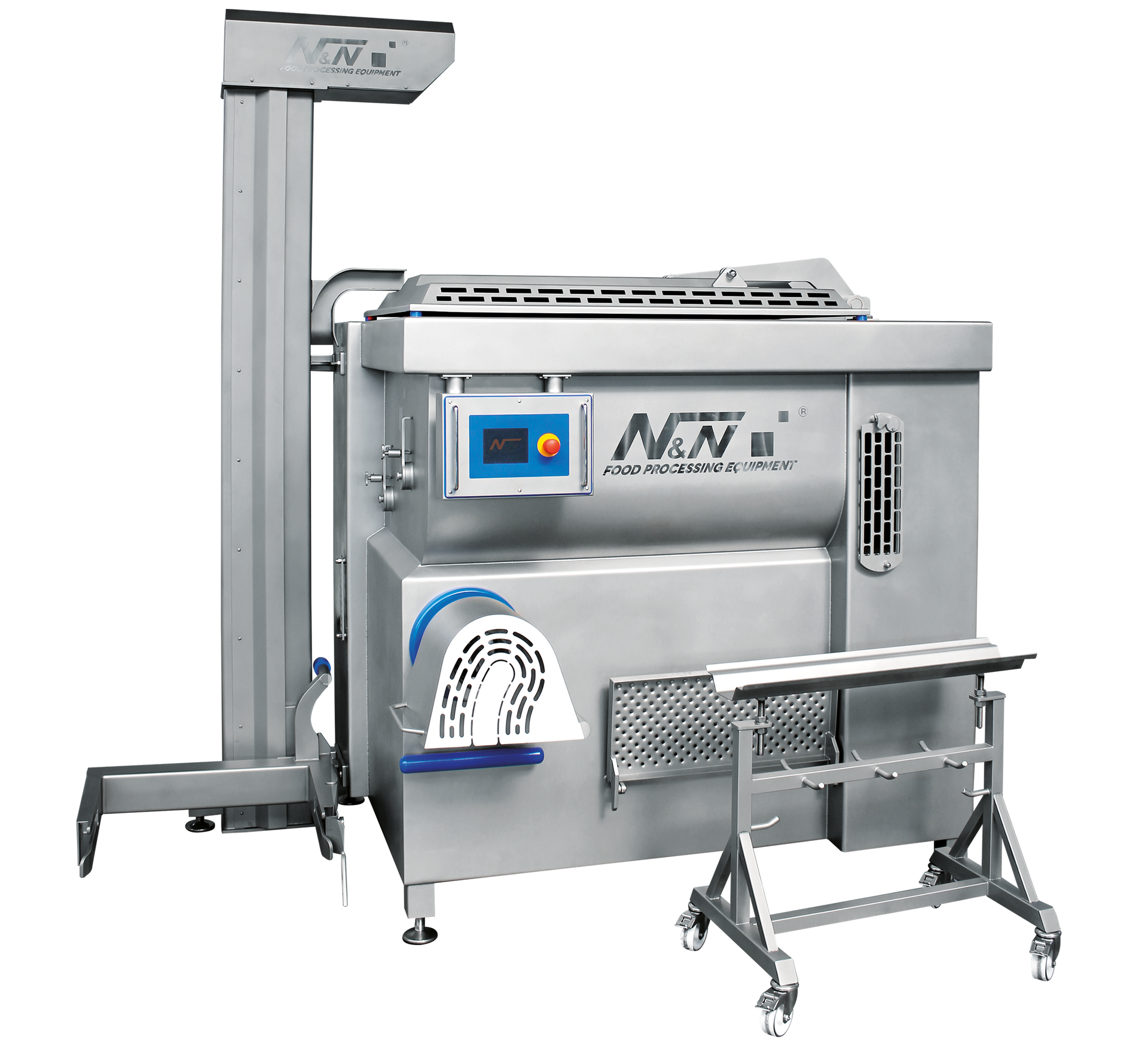
Mixer-Grinders for Efficient Food Processing
What makes the MG Series mixer-grinders unique?
The MG Series mixer-grinders from BAK Food Equipment stand out due to their advanced engineering and user-focused design. These mixer grinders combine both mixing and grinding functions in a single, seamless process, streamlining production and reducing the need for multiple machines. Constructed from high-grade stainless steel, the MG Series is built for industrial durability, ensuring longevity and reliability in demanding food processing environments. The auger, machined from a single block, further enhances the machine’s strength and operational consistency. An intuitive, programmable touch screen allows operators to store up to 100 custom programs, providing flexibility and repeatability for a wide range of recipes and production needs. Additionally, the design prioritizes easy cleaning and routine maintenance, minimizing downtime and supporting food safety standards.
How does the twin-paddle system improve mixing?
The MG Series features an advanced twin-paddle mixing system, which is engineered to deliver faster and more uniform mixing compared to traditional single-paddle or ribbon mixers. The synchronized paddles ensure that ingredients are thoroughly blended, eliminating pockets of unmixed material and promoting a consistent product texture. This system is particularly beneficial for applications where ingredient distribution is critical, such as in sausage, burger, and meat stuffing production. Variable speed adjustments give operators full control over the mixing process, allowing them to tailor the intensity and duration of mixing to the specific requirements of each product batch.
Why is direct-flow grinding beneficial?
Direct-flow grinding is a key innovation in the MG Series, with the grinder positioned directly beneath the mixer tank. This configuration allows for immediate transfer of mixed product to the grinding stage, reducing product handling and minimizing waste. By streamlining the transfer process, direct-flow grinding not only increases efficiency but also helps maintain product integrity and hygiene. This design is especially advantageous in high-volume operations, where speed and consistency are essential.
What industries and products are they suited for?
The MG Series mixer-grinders are versatile solutions suited for a wide range of industries and products. They are ideal for meat processing facilities producing sausages, burgers, and meat stuffing's, as well as for manufacturers of pet food and other processed foods. The robust construction and flexible programming make these machines suitable for both small-batch specialty producers and large-scale industrial operations. Whether the need is for precise ingredient blending or high-throughput grinding, the MG Series delivers reliable performance across diverse food processing applications, supporting the demands of modern industrial food mixing and meat processing grinders.
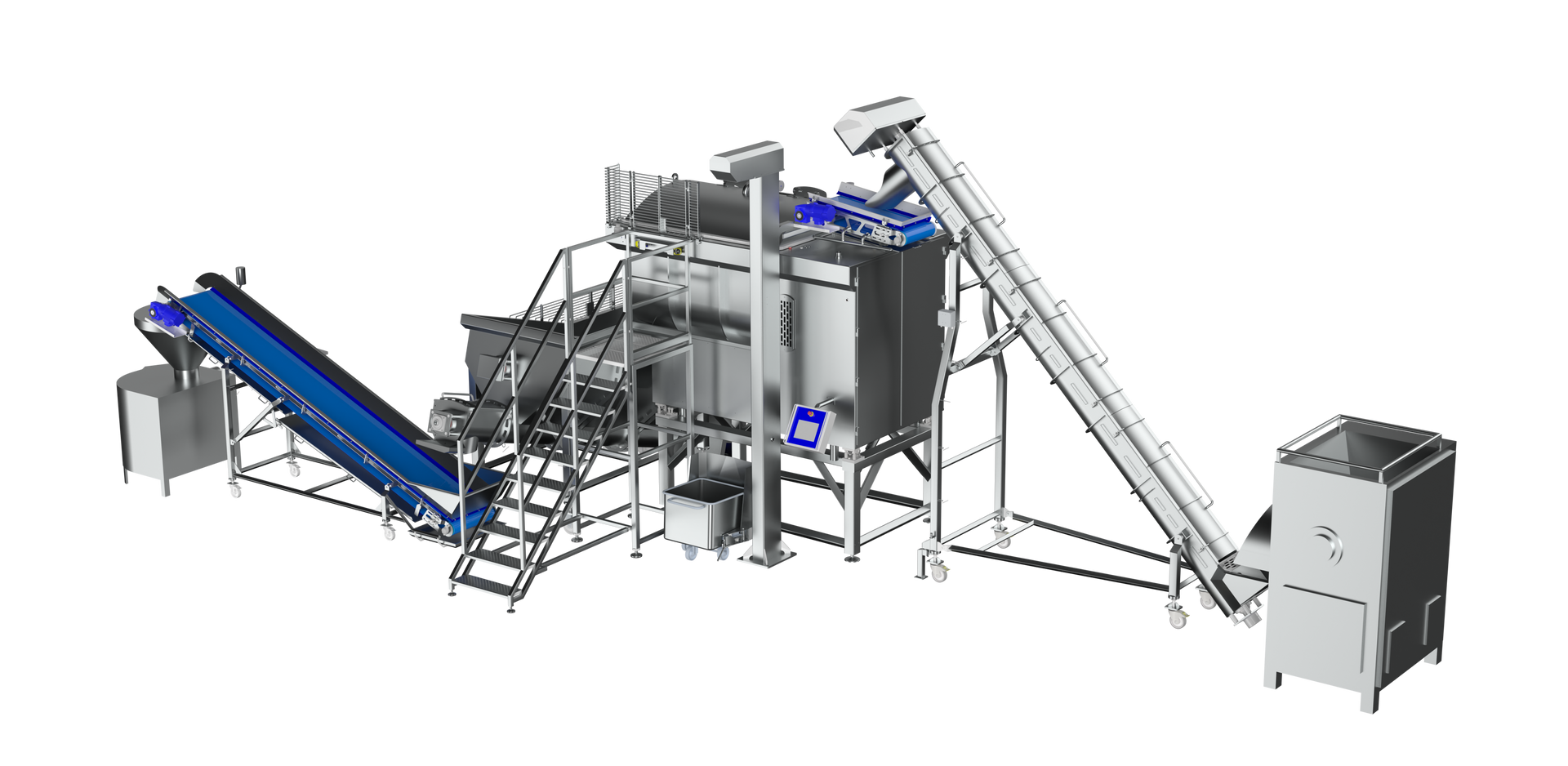
Automated Mixing & Grinding Lines for Scalable Production
What is automated meat processing and why is it important?
Automated meat processing refers to the use of advanced machinery and control systems to handle the preparation, mixing, grinding, and further processing of meat and other food products with minimal manual intervention. This approach is crucial for modern food producers because it delivers significant benefits in efficiency, consistency, and labor savings. By automating repetitive and labor-intensive tasks, companies can achieve higher throughput, maintain uniform product quality, and reduce the risk of human error. Additionally, automation supports improved hygiene and food safety by minimizing manual handling of raw materials.
How does a mixing-grinding line streamline food production?
A mixing-grinding line integrates multiple processing steps—such as mixing, grinding, emulsifying, and even cooking—into a continuous, automated workflow. BAK Food Equipment’s solutions combine mixers, grinders, mixer-grinders, emulsifiers, mix-cook units, and metal detection systems into a single, cohesive line. This integration eliminates the need for manual transfer between machines, reducing downtime and contamination risks. The result is a streamlined production process that boosts output, ensures consistent product texture and quality, and optimizes resource use across the facility.
How customizable are BAK’s automated lines?
BAK’s automated mixing-grinding lines are highly customizable to meet the unique needs of each customer. Systems are designed around specific throughput requirements, with microprocessor-controlled technology enabling precise control over every stage of production. Whether a facility requires a simple setup for small-batch production or a complex, fully automated line for industrial-scale output, BAK can tailor the configuration to fit.
What types of products can these lines handle?
BAK’s automated mixing-grinding lines are engineered to handle a wide variety of products beyond just meat. Typical applications include sausages, burgers, doughs, pet food, dairy products, vegetables, fruits, and sauces. The robust design and versatility of the equipment ensure that processors can maintain high standards of quality and hygiene across diverse product categories, making these lines an ideal solution for companies seeking to expand or diversify their offerings in the competitive food industry.
Industries Using Mixing & Grinding Lines, and Mixer-Grinder Solutions
Which industries rely on mixer-grinders and automated lines?
Mixer-grinders and automated mixing-grinding lines are essential across a wide range of food automation industries. Meat processors are among the primary users, leveraging these systems for products such as sausages, burgers, and snack sticks, where consistent texture and thorough blending are critical. Prepared food manufacturers also depend on mixing lines for salads, sauces, and ready-to-eat meals, ensuring uniformity and food safety. Bakeries utilize bakery mixing systems for doughs and breads, while the pet food processing sector relies on these solutions to meet strict quality and nutritional standards. Additionally, dairy processors use mixing lines for cheeses and other processed dairy products.
What challenges do these solutions address?
Mixer-grinder solutions and mixing & grinding lines from BAK Food Equipment are designed to address several key challenges faced by food manufacturers. Labor shortages are a significant concern in the industry, and automation helps reduce dependency on manual labor while maintaining high throughput. These systems also support compliance with stringent safety regulations by minimizing human contact and ensuring hygienic processing environments. Furthermore, the demand for consistent product quality is met through precise, repeatable mixing and grinding, which is difficult to achieve with manual processes.
How do they scale with different production environments?
Scalability is a core advantage of BAK Food Equipment’s mixer-grinder solutions and mixing & grinding lines. These systems are available in customizable sizes and configurations, allowing businesses to select equipment that matches their current production needs and easily expand as demand grows. As production volume increases, the cost per pound of finished product decreases, providing a clear economic benefit. This flexibility ensures that both small-scale operations and large industrial producers can achieve improved compliance, consistent product quality, and operational efficiency as they scale.
Your Partner in Automated Mixing & Grinding
Why partner with BAK Food Equipment?
Choosing BAK Food Equipment as your food automation partner means leveraging decades of experience in industrial meat processing. Our founder’s hands-on background in sausage production ensures that every solution is rooted in real-world expertise and a deep understanding of the challenges faced by processors. We are committed to delivering fully customizable solutions that are tailored to your unique production goals, whether you require a single mixer grinder or a fully automated mixing-grinding line.
What expertise and support does BAK provide?
BAK Food Equipment offers comprehensive support at every stage of your project. From initial consultation and needs assessment to design, installation, and ongoing maintenance, our team is dedicated to your success. Our expertise in industrial meat processing allows us to recommend and implement the most effective mixer-grinder solutions and mixing & grinding lines for your operation. We pride ourselves on being a true partner, providing guidance and technical support to ensure your equipment delivers optimal performance and reliability.
How are solutions designed for long-term value?
Our mixer-grinders and mixing & grinding lines are constructed from durable stainless steel, ensuring long-lasting reliability and easy sanitation. Each system is engineered for efficiency, combining mixing and grinding in a seamless process that maximizes throughput and product consistency. By focusing on robust design and quality materials, BAK Food Equipment delivers solutions that provide long-term value and minimize downtime.
Ready to take your production to the next level? Inquire now to discover how BAK Food Equipment can design a custom solution for your automated mixing and grinding needs.
Mixing & Grinding Equipment FAQs
What is automated meat processing?
Automated meat processing refers to the use of advanced machinery and technology to mix, grind, and prepare meat products with minimal manual intervention. By integrating equipment like mixer-grinders, food processors can achieve consistent product quality, improved safety, and greater efficiency. Automation ensures that each batch is processed under the same conditions, reducing the risk of human error and contamination.
How does a mixing-grinding line streamline production?
A mixing-grinding line combines the functions of mixing and grinding into a single, continuous process. This eliminates the need for manual transfers between separate machines, reducing labor requirements and the potential for cross-contamination. Integrated systems ensure that every batch is handled identically, resulting in uniform product quality and a more efficient workflow. The streamlined process also simplifies cleaning and maintenance, further minimizing downtime.
Can these systems handle products beyond meat?
Absolutely. Mixer-grinders and mixing & grinding lines are versatile and can be used for a wide range of food products beyond meat. Applications include doughs, cheeses, salads, sauces, fruits, vegetables, and even pet food. This flexibility makes mixer-grinders and mixing & grinding lines valuable assets for commercial food processors looking to expand their product offerings or improve efficiency across multiple product lines.
What food safety benefits come with automation?
Automated mixer-grinders and mixing & grinding lines significantly reduce manual handling of food products, which lowers the risk of contamination. Consistent processing conditions make it easier to comply with food safety regulations, and automated cleaning features help maintain hygienic equipment. By minimizing manual handling and standardizing procedures, automation supports a safer production environment.
How does automation lower costs?
Automation with mixer-grinders and mixing & grinding lines reduces labor needs by streamlining production and minimizing manual tasks. Consistent processing leads to less product waste and higher yields, while easy-to-clean designs decrease downtime for maintenance. These factors combine to lower overall operating costs and improve profitability for food processors.
