

Paddle Mixer vs Ribbon Mixer: Industrial Mixing Guide
Introduction to Paddle Mixers vs Ribbon Mixers
What is the difference between paddle mixers and ribbon mixers?
Paddle mixers and ribbon mixers are two of the most widely used types of industrial mixing equipment in food manufacturing. Both are designed to blend ingredients efficiently, but they operate using distinct mixing actions and are best suited for different product types. Paddle mixers use large, flat paddles mounted on a rotating shaft to gently lift and tumble ingredients, making them ideal for mixing a wide range of products without damaging their texture. Ribbon mixers, on the other hand, feature helical ribbons that move materials both radially (front to back) and laterally (side to side), creating a more aggressive mixing action that is well-suited for dry powders or granular ingredients.
Why is mixer selection important in food processing?
Selecting the right food processing mixer is critical for achieving consistent product quality, maintaining desired textures, and maximizing throughput. The wrong choice can lead to issues such as uneven mixing, ingredient degradation, and less consistent product. In industrial food manufacturing, the mixer must align with the specific characteristics of the ingredients—such as moisture content and particle size—as well as the overall processing goals. A well-matched mixer not only ensures product consistency but also supports operational efficiency and scalability as production demands grow.
How do processors determine which system is right for their operation?
Processors evaluate several factors when choosing between a paddle mixer and a ribbon mixer. Key considerations include the moisture level of the product, the fragility of the ingredients, the desired mixing speed, and the need for gentle versus intensive blending. For example, products with higher moisture or denser texture often benefit from the versatility of a paddle mixer, while dry blends or powders are typically better suited to the thorough mixing provided by a ribbon mixer. Ultimately, the decision is guided by the specific requirements of the application, with the goal of optimizing product quality, sanitation, labor efficiency, and long-term scalability.
How Paddle Mixers Work
How does an industrial paddle mixer operate?
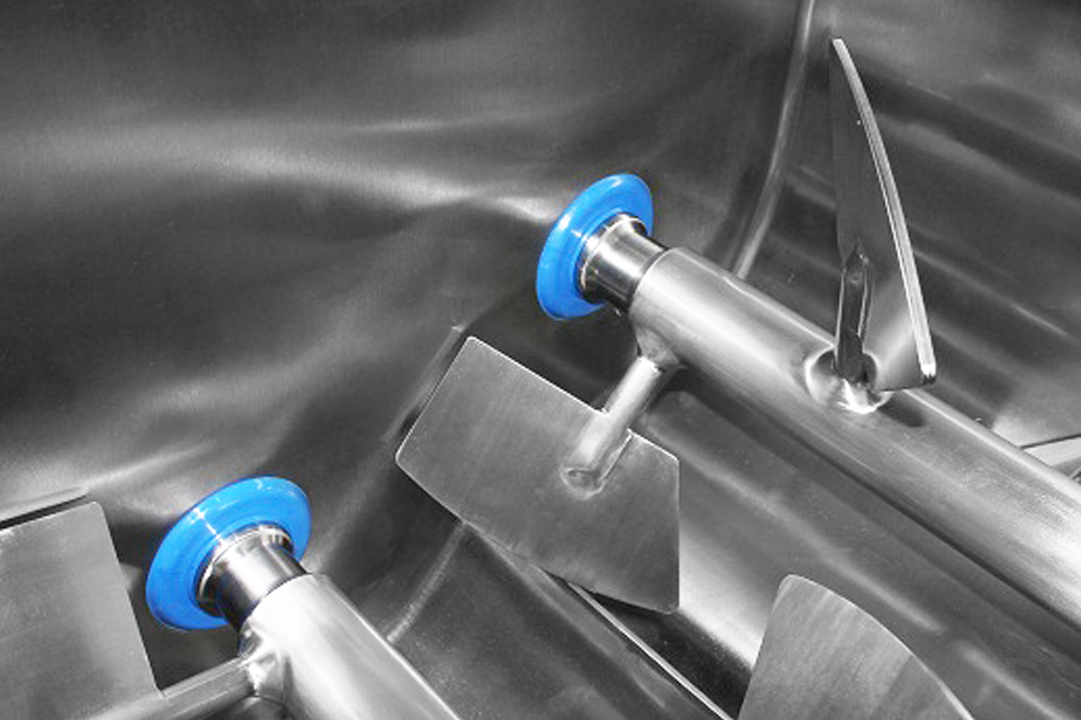
An industrial paddle mixer operates by using a series of rotating paddles mounted on a horizontal shaft within a mixing chamber. As the paddles turn, they gently lift, fold, and move the product throughout the chamber, ensuring thorough and uniform mixing. Unlike high-shear mixers, paddle mixers are designed to minimize product degradation by handling ingredients gently. This gentle action is especially important for sensitive products where maintaining texture and integrity is critical.
Many industrial paddle mixers feature intermeshing paddle designs, where two shafts with overlapping paddles rotate in opposite directions. This configuration creates overlapping mixing zones, which help to consistently blend ingredients and eliminate dead spots within the chamber. The result is a homogenous mixture, even with challenging or high-moisture products.
What products are best suited for paddle mixers?
Paddle mixers are particularly well-suited for a wide range of food products that require gentle yet thorough mixing. Common applications include ground meat, poultry, marinades, prepared foods, plant-based proteins, and other high-moisture products. Their ability to handle delicate ingredients without excessive shear makes them ideal for protein mixing equipment needs, where maintaining product structure and moisture content is essential.
Why are paddle mixers commonly used in protein processing?
Paddle mixers are a preferred choice in protein processing due to their gentle product handling and ability to maintain product integrity. In meat processing mixers, the gentle folding action of the paddles helps preserve the texture of ground meat and poultry, preventing overworking or smearing of proteins. Additionally, vacuum paddle mixers are often used in protein processing to enhance protein extraction, improve marinade absorption, and control final product texture. The vacuum environment allows for better penetration of seasonings and liquids, resulting in a more flavorful and consistent product. For applications where product quality and consistency are paramount, intermeshing paddle mixers offer a reliable solution that balances efficiency with gentle handling.
How Ribbon Mixers Work
How does a ribbon mixer operate?
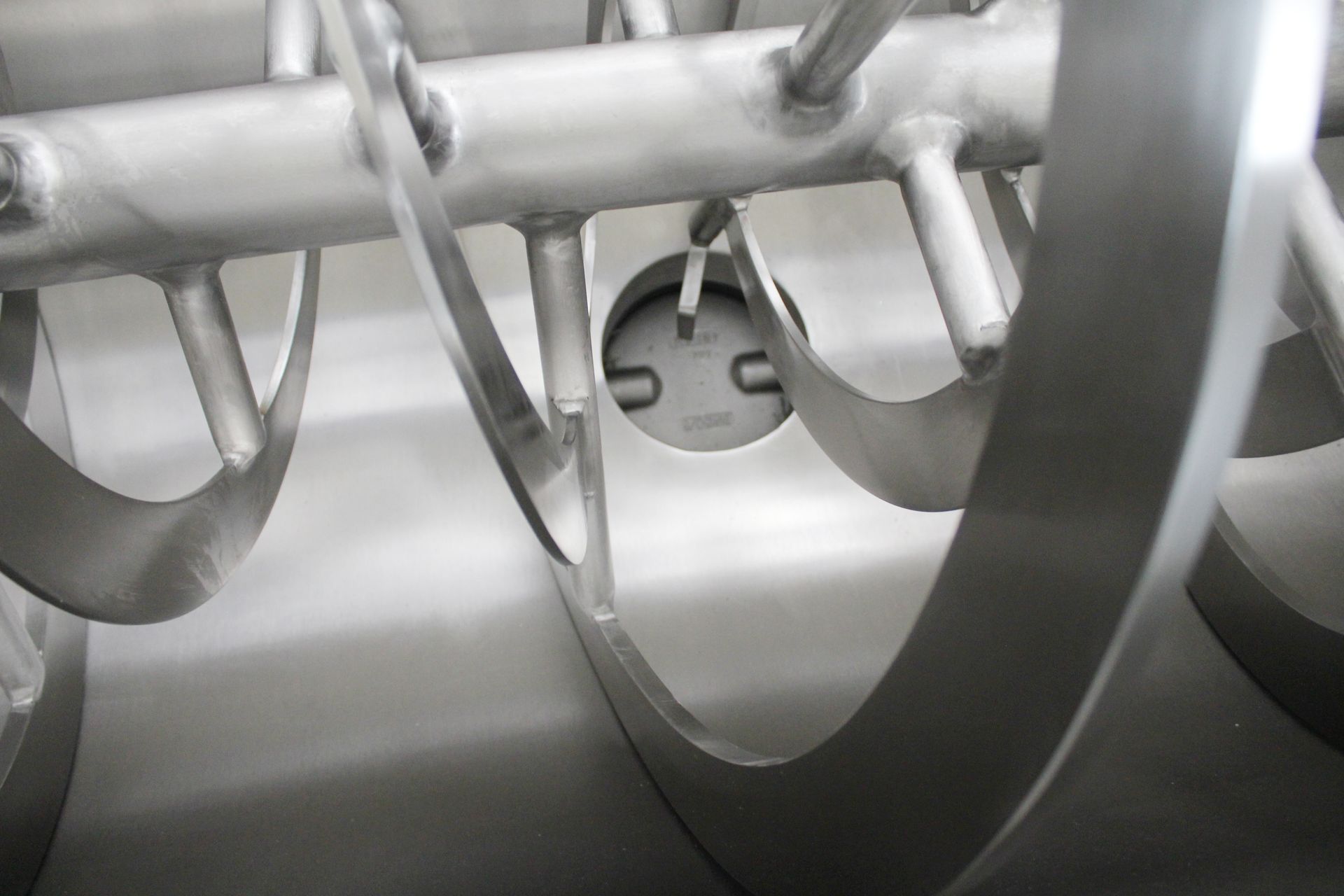
A ribbon mixer, also known as an industrial ribbon mixer or ribbon blender mixer, operates using a horizontal trough that houses a set of inner and outer helical ribbons. These ribbon agitators are designed to rotate in opposite directions, creating a counter-current flow of materials within the mixing chamber. As the ribbons turn, the inner ribbon moves ingredients in one direction while the outer ribbon moves them in the opposite direction. This dual-action movement ensures that materials are continuously lifted, folded, and dispersed throughout the batch, resulting in a thorough and uniform blend.
What products are best suited for ribbon mixers?
Ribbon mixers are particularly effective for blending free-flowing, lightweight dry products, and liquid products. They are widely used for spice blends, powdered ingredients, bakery mixes, dry seasonings, and protein powders. The design of the ribbon agitators allows for gentle yet efficient mixing, making these mixers ideal for applications where ingredient integrity and uniform distribution are critical. Ribbon mixers excel in delivering repeatable consistency across large volumes of product.
Why are ribbon mixers effective for dry blending applications?
Ribbon mixers are optimized for dry blending and liquid applications due to their ability to provide continuous product flow and efficient mixing action. The opposing movement of the inner and outer ribbons ensures that all ingredients are evenly distributed, minimizing the risk of dead spots or unmixed pockets. This makes ribbon mixers a preferred choice for powder mixing systems and other dry blending equipment needs. However, it is important to note that ribbon mixers are generally less suitable for sticky or high-moisture products, as these materials can adhere to the ribbons and trough, reducing mixing efficiency. For most dry and liquid ingredient applications, ribbon mixers offer a reliable solution for achieving uniform blends and high throughput.
Paddle Mixer vs Ribbon Mixer: Key Difference
What are the biggest differences between paddle mixers and ribbon mixers?
When comparing paddle mixers and ribbon mixers, the most significant differences lie in their mixing action, product movement, and suitability for various food processing applications. Paddle mixers use large, flat paddles that gently lift and tumble ingredients, making them ideal for delicate or protein-heavy products where texture preservation is critical. In contrast, ribbon mixers utilize helical ribbons that move ingredients both radially and laterally, providing a more aggressive mixing action that is well-suited for lightweight, dry, and free-flowing ingredients.
How do mixing actions differ?
The mixing action in a paddle mixer is characterized by a gentle folding and tumbling motion. This approach minimizes shear, which helps maintain the integrity of sensitive ingredients such as proteins or particulates. Ribbon mixers, on the other hand, create a more vigorous mixing environment. The ribbons continuously move product along the length of the mixer while simultaneously lifting and folding it, resulting in faster blending but higher shear levels. This makes ribbon mixers more efficient for homogenous blending of powders and dry ingredients, but less suitable for products that require gentle handling.
How does product type affect equipment selection?
Product characteristics play a crucial role in determining whether a paddle mixer or ribbon mixer is the best fit. Paddle mixers excel with sticky, high-moisture, or fragile products, as their design prevents excessive compaction and preserves product texture. They are also commonly used in applications that require vacuum mixing, such as marinating proteins or preparing emulsified products. Ribbon mixers, by contrast, are preferred for dry blending applications where ingredients are free-flowing and require rapid, uniform mixing. However, sticky or high-moisture products can adhere to the ribbons, reducing efficiency and complicating sanitation.
Paddle mixers generally operate at lower shear levels, making them suitable for products that are sensitive to over-mixing or breakdown. Their open design also facilitates easier cleaning and sanitation, which is essential in food processing environments. Ultimately, the choice between a paddle mixer and a ribbon mixer should be guided by production goals, product characteristics, and the specific requirements of your food blending systems.
Which Mixer Is Better for Meat and Protein Processing?
Why are paddle mixers common in meat processing?
Paddle mixers are widely used in meat processing because they provide gentle yet thorough mixing, which is essential for maintaining the integrity of proteins and achieving consistent product quality. In protein applications, overworking or damaging the protein structure can negatively impact texture, yield, and binding properties. Paddle mixers are designed to move product in a tumbling motion, ensuring even distribution of ingredients without excessive shear or heat generation. This gentle action is particularly important for bind development, and marinade/seasoning absorption—key steps in producing high-quality sausages and processed meats. Vacuum paddle mixers take these benefits further by removing air during mixing, which enhances protein extraction, improves texture consistency, and supports better marinade penetration. This makes vacuum paddle mixers especially valuable in sausage production and other processed meat applications where texture and binding are critical.
Can ribbon mixers handle protein applications?
Ribbon mixers are generally better suited for dry protein blends or powder-based formulations rather than sticky, high-moisture meat applications. Their helical ribbon design is effective for blending free-flowing powders, granular ingredients, and liquids but it can struggle with the dense, cohesive nature of ground meats and protein slurries. In these cases, ribbon mixers may not provide the gentle mixing action required to avoid overworking proteins or causing product smearing.
What mixer characteristics matter most for protein products?
When selecting a mixer for protein products, several characteristics are crucial: gentle mixing action to prevent protein damage, effective ingredient distribution for consistent flavor and texture, and the ability to handle varying product viscosities. Industrial meat mixers, particularly vacuum paddle mixers, excel in these areas by providing controlled mixing environments that support protein extraction and bind development without compromising product quality. Minimizing product damage and avoiding overworking proteins are essential for achieving the desired texture, yield, and appearance in meat and protein-based foods. For these reasons, paddle mixers—especially those with vacuum capability—are often the preferred choice in meat processing mixers and protein extraction equipment.
Sanitation and Food Safety Considerations
How do industrial mixers support food safety?
Industrial mixers play a critical role in supporting food safety by ensuring that every batch is processed in a clean, controlled environment. The use of stainless steel mixers is standard in the industry because stainless steel is non-porous, corrosion-resistant, and easy to sanitize, which helps prevent bacterial growth and cross-contamination. Additionally, many modern mixers are designed with sanitary food equipment standards in mind, incorporating features such as smooth welds, minimal crevices, and sealed bearings to further reduce contamination risks. Automation and programmable controls also contribute to food safety by enabling consistent batch processing and traceability, ensuring that each product meets strict quality and safety requirements.
What sanitation features should processors look for?
Processors should prioritize mixers with hygienic mixer design elements that facilitate thorough cleaning and maintenance. Key features include easy-clean access panels and sloped surfaces that prevent product buildup and pooling of cleaning fluids. Washdown compatibility is essential, allowing equipment to be cleaned in place with high-pressure water or cleaning solutions. Hygienic discharge systems, such as flush-mounted valves and smooth product pathways, help ensure complete evacuation of mixed materials and reduce the risk of residue harboring bacteria. These features not only support food safety but also minimize downtime and labor associated with cleaning, improving overall operational efficiency.
Why does hygienic design matter in industrial mixing equipment?
Hygienic design is fundamental in industrial food processing because it directly impacts the ability to maintain a safe and compliant production environment. Equipment that is difficult to clean or prone to product buildup can become a source of contamination, leading to food safety incidents, product recalls, and regulatory non-compliance. By investing in food safety equipment with robust hygienic design, processors can reduce contamination risks, streamline sanitation procedures, and ensure compliance with industry standards. This focus on sanitation also supports labor efficiency and reduces downtime, as equipment can be cleaned more quickly and thoroughly between batches, keeping production lines running smoothly and safely.
Choosing the Right Industrial Mixer for Your Operation
How should processors choose between paddle mixers and ribbon mixers?
Selecting the right industrial mixer is a critical decision for food processors, as it directly impacts product quality, operational efficiency, and long-term scalability. The choice between paddle mixers and ribbon mixers should begin with a thorough evaluation of your product type and processing requirements. Paddle mixers are generally preferred for mixing products with higher moisture content, fragile particulates, or those requiring gentle agitation, such as salads, marinated proteins, or delicate fillings. Ribbon mixers, on the other hand, are ideal for dry blending applications, powders, and products that benefit from a more aggressive mixing action, such as spice blends or liquids.
What operational factors matter most?
Key operational factors to consider include batch size, throughput goals, automation requirements, and sanitation standards. High-capacity mixers are essential for operations with large batch sizes or continuous production demands. Automation capabilities, such as programmable controls and integration with industrial processing systems, can significantly improve labor efficiency and consistency. Sanitation is another critical factor—look for mixers designed with easy-to-clean surfaces and minimal product retention to meet stringent food safety standards. Additionally, consider how the mixer will fit into your existing workflow and whether it can be easily integrated with upstream and downstream equipment.
How does scalability impact equipment decisions?
Scalability is a vital consideration for processors planning future production growth. When evaluating industrial mixer sizing, assess not only your current needs but also projected increases in volume or product variety. Investing in mixers that can accommodate larger batch sizes or be upgraded with automation features supports long-term food production scalability. Many processors find value in operating both paddle mixers and ribbon mixers within their facilities, using each for different product lines to maximize flexibility and efficiency. Ultimately, integrating your mixer selection into a broader strategy for food manufacturing automation and workflow optimization will position your operation for sustainable growth.
Conclusion: Paddle Mixer vs Ribbon Mixer
Which industrial mixer is better?
When comparing paddle mixers and ribbon mixers, it’s important to recognize that neither system is universally superior. Each mixer is engineered for specific applications within industrial food manufacturing, and the best choice depends on the unique requirements of your production process. Paddle mixers excel in handling high-moisture, protein-heavy, and delicate products, ensuring gentle yet thorough mixing without damaging sensitive ingredients. In contrast, ribbon mixers are ideal for dry powders and free-flowing ingredients, offering efficient and consistent blending for applications where uniformity and speed are critical.
When should processors choose paddle mixers vs ribbon mixers?
Processors should select paddle mixers when working with products that require careful handling to maintain texture and integrity, such as ground meats and other meat products. The design of paddle mixers allows for effective mixing of sticky or fragile materials without excessive shear. Ribbon mixers, on the other hand, are best suited for dry blending and liquid applications, such as spices, baking mixes, or other granular ingredients, where rapid and homogeneous mixing is essential.
What factors ultimately determine the best system?
The optimal choice between a paddle mixer and a ribbon mixer is determined by several factors: the characteristics of the product being mixed, the desired consistency, and the overall production goals. Considerations such as batch size, ingredient sensitivity, moisture content, and throughput requirements all play a role in selecting the right industrial mixing equipment. Ultimately, the decision should be driven by the specific needs of your food processing systems and the outcomes you wish to achieve.
Industrial mixing systems are foundational to scalable, repeatable food manufacturing. Choosing the right mixer configuration is critical to ensuring product quality, process efficiency, and operational success. For processors evaluating their options, it’s essential to assess your operational requirements and consult with experienced equipment providers like BAK Food Equipment. To explore the full range of industrial food mixers, including Parallel Twin Shaft Cooking Mixers and Single Shaft Double Ribbon Contra Flow Mixers, visit our Industrial Food Mixers page for more information and expert guidance.
