

Mixing vs Blending in Food Processing
Introduction to Mixing and Blending
What is mixing and how is it used in food production?
Mixing is combining ingredients so they are evenly distributed and keep their particle definition. In food production, mixing is essential for ensuring that each component—whether dry or wet—is uniformly dispersed throughout the batch. This process is critical for products where the individual characteristics of each ingredient must be maintained, such as in granola or vegetable medleys. BAK Food Equipment offers a range of mixers, including paddle, ribbon, and Z-type shaft mixers, designed to achieve optimal ingredient distribution for a variety of processing needs.
What is blending and how does it differ from mixing?
Blending is creating a new product by combining multiple ingredients into a homogenous product. Unlike mixing, where the goal is even distribution while maintaining particle definition, blending aims for a uniform, single-phase mixture where the original components are no longer distinguishable. This is crucial for products like sauces, batters, or processed meats, where a consistent texture and flavor throughout the product are required. The distinction between mixing and blending lies in the end result: mixing preserves the identity of each ingredient, while blending transforms them into a new, unified product.
Why are both processes important for food quality and consistency?
Both mixing and blending are core food processing techniques that directly impact texture in food, flavor consistency, and overall product stability. Proper mixing ensures that every portion of a product contains the intended ratio of ingredients, supporting quality control and consumer satisfaction. Effective blending, on the other hand, guarantees a smooth, homogenous product that meets specific texture and flavor requirements. Understanding the differences between these processes allows food manufacturers to select the right equipment and methods, improving efficiency and ensuring high-quality, consistent products.
Understanding Mixing Techniques
What are the key methods of mixing in food production?
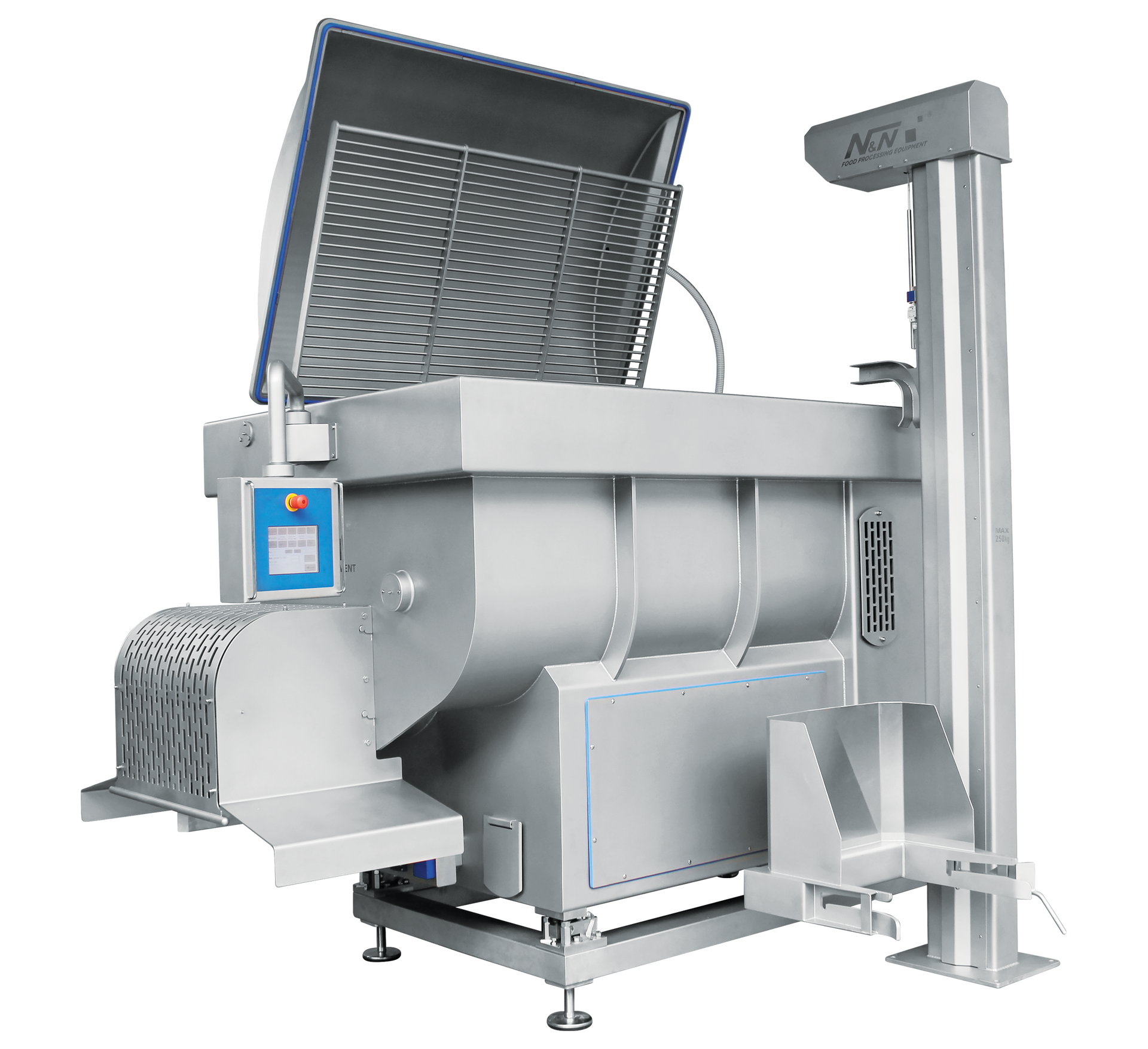
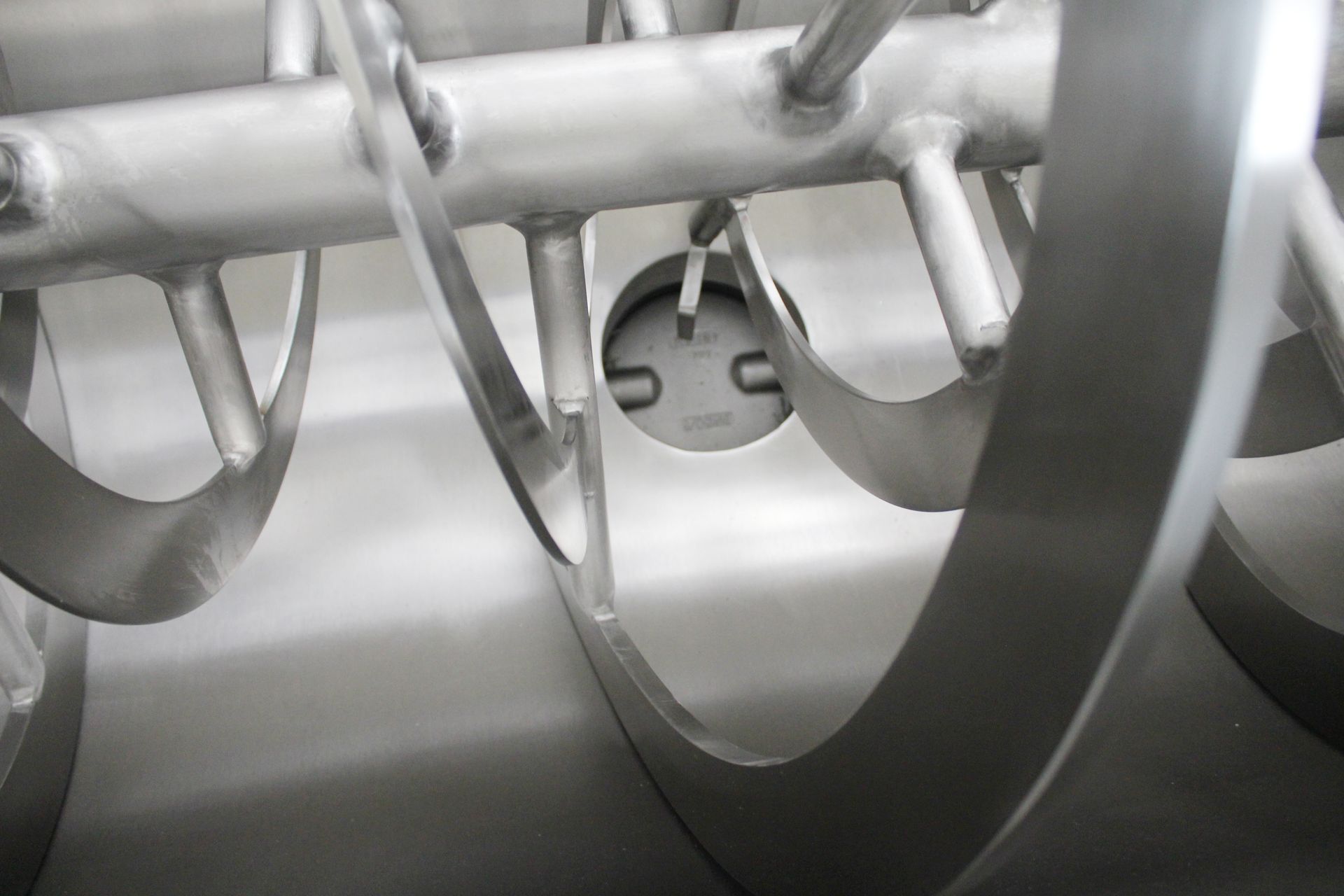
Mixing methods depend on the type of equipment that is used. BAK’s industrial mixers includes paddle, ribbon, and Z-type shaft mixers. Paddle mixers are very versatile machines being able to mix a broad range of products. Ribbon mixers are more suited to very fine or liquid/semi-liquid products, while Z-type shaft mixers are geared towards mixing very dense products.
How do mixing techniques vary by product type (liquid, semi-solid, or dry)?
Mixing techniques are tailored to the physical properties of the product. For liquids, gentle agitation is often sufficient to achieve uniformity. Semi-solids, like doughs or batters, require more robust mixing to ensure even distribution without overworking the product. Dry ingredients or bulk solids benefit from mixers that maintain particle definition while achieving thorough distribution, such as ribbon or paddle mixers. The choice of mixer is critical to mixer technique as it ensures that each ingredient is properly incorporated, whether the goal is to maintain texture or achieve a specific consistency.
Why is selecting the right mixing method critical to quality?
Selecting the appropriate mixing method is essential for product uniformity and quality. The speed, time, and shear force applied during mixing directly impact the final texture and structure of the product. For example, overmixing dough can lead to toughness, while undermixing sauces may result in uneven flavor distribution. Using the right industrial mixer and technique ensures that ingredients are combined efficiently, maintaining the desired characteristics of the finished product and supporting consistent results in every batch. Mixing for baking, meat processing, and sauce production all rely on precise control to meet quality standards.
Mastering Blending Methods
How does blending create uniform mixtures in food processing?
Blending is the process of creating a new product by combining multiple ingredients into a homogenous product. In food processing, blending ensures that all components—whether powders, liquids, or particulates—are distributed evenly at a very small level, resulting in a smooth, consistent mixture. This is especially important in products like sauces, soups, and meat blends like those used in snack stick production, where uniformity directly impacts product quality, taste, and appearance. Unlike mixing, which simply distributes ingredients while maintaining their individual particle definition, blending transforms the ingredients into a single, cohesive product.
What are the main techniques used in blending dry and liquid ingredients?
Blending techniques vary depending on the nature of the ingredients. For highly dense ingredients, a Z-type shaft mixer will be needed. For most other products, an intermeshing paddle mixer’s versatility is better suited. These machines are designed to minimize ingredient degradation and ensure even distribution. For liquid or semi-liquid products, ribbon mixers are ideal to create stable, uniform mixtures. The choice of equipment and technique depends on the desired texture, particle size, and compatibility of the ingredients. If an extremely uniform product is desired, operators should consider emulsifying their product using a using a bowl cutter or pass through emulsifier.
Why is blending key to consistency and efficiency in production?
Blending is essential for achieving product consistency and production efficiency. Uniform blends ensure that every batch meets the same quality standards, reducing variability and waste. This is particularly critical in large-scale food processing, where even minor inconsistencies can lead to product recalls or customer dissatisfaction. Efficient blending also streamlines production by reducing processing times and minimizing the need for rework. BAK Food Equipment offers a range of mixers (blenders), bowl cutters, emulsifiers, and automated blending systems designed to handle diverse processing needs, from liquid blending to complete emulsification, ensuring smooth, homogenous blends at scale. By focusing on particle size, ingredient compatibility, and the right blending techniques, manufacturers can achieve reliable results and maintain high standards across their product lines.
Mixing vs Blending: Key Differences
What distinguishes mixing from blending in food processing?
Mixing and blending are often used interchangeably, but they serve distinct purposes in food processing. Mixing is the process of combining ingredients so they are evenly distributed and keep their particle definition. This means that after mixing, you can still identify the individual components, but they are uniformly spread throughout the mixture. In contrast, blending is creating a new product by combining multiple ingredients into a homogenous product. The result is a uniform substance where the original ingredients are no longer distinguishable.
When should manufacturers use one process over the other?
Manufacturers should choose mixing when the goal is to maintain the integrity of each ingredient while ensuring even distribution. This is ideal for applications like vegetable mixes, pre-made salads, and hearty soups where ingredients need to be thoroughly combined but not fully homogenized. Blending is preferred when a completely uniform product is required, such as in meat blends used in snack stick production, where the end product must be consistent in every portion.
How does each method impact product outcome?
The choice between mixing and blending directly affects product texture, particle distribution, and air incorporation. Mixing results in products with distinct textures and visible ingredient particles. Blending produces a smooth, homogenous texture with consistent food uniformity. For example, mixing is used for a vegetable medley, while blending is essential for creating meat blends used in snack stick production. Understanding the differences in process types and outcomes helps manufacturers select the right approach for their desired product characteristics.
Equipment and Process Considerations
What equipment is commonly used for mixing and blending in food production, and what factors should guide equipment selection?
In food production, the choice of equipment is critical to achieving the desired results for both mixing and blending. Industrial mixers such as paddle mixers, ribbon blenders, and Z-type shaft mixers are widely used for both mixing and blending depending on system settings. Paddle mixers (blenders) are extremely versatile being able to mix or blend most products, and ribbon mixers (blenders) are particularly effective for handling bulk solids and dry ingredients, as well as liquid products. Z-type shaft mixers (blenders) are needed for highly dense products. These pieces of equipment from BAK are designed to ensure even distribution or homogeneity depending on the process. Bowl cutters and emulsifiers represent the limit in creating an extremely uniform product. BAK Food Equipment offers a range of these solutions, including intermeshing paddle mixers, parallel twin shaft mixers (paddle or ribbon), and automated mixing lines, all designed to meet diverse processing needs.
How do design and automation impact process results?
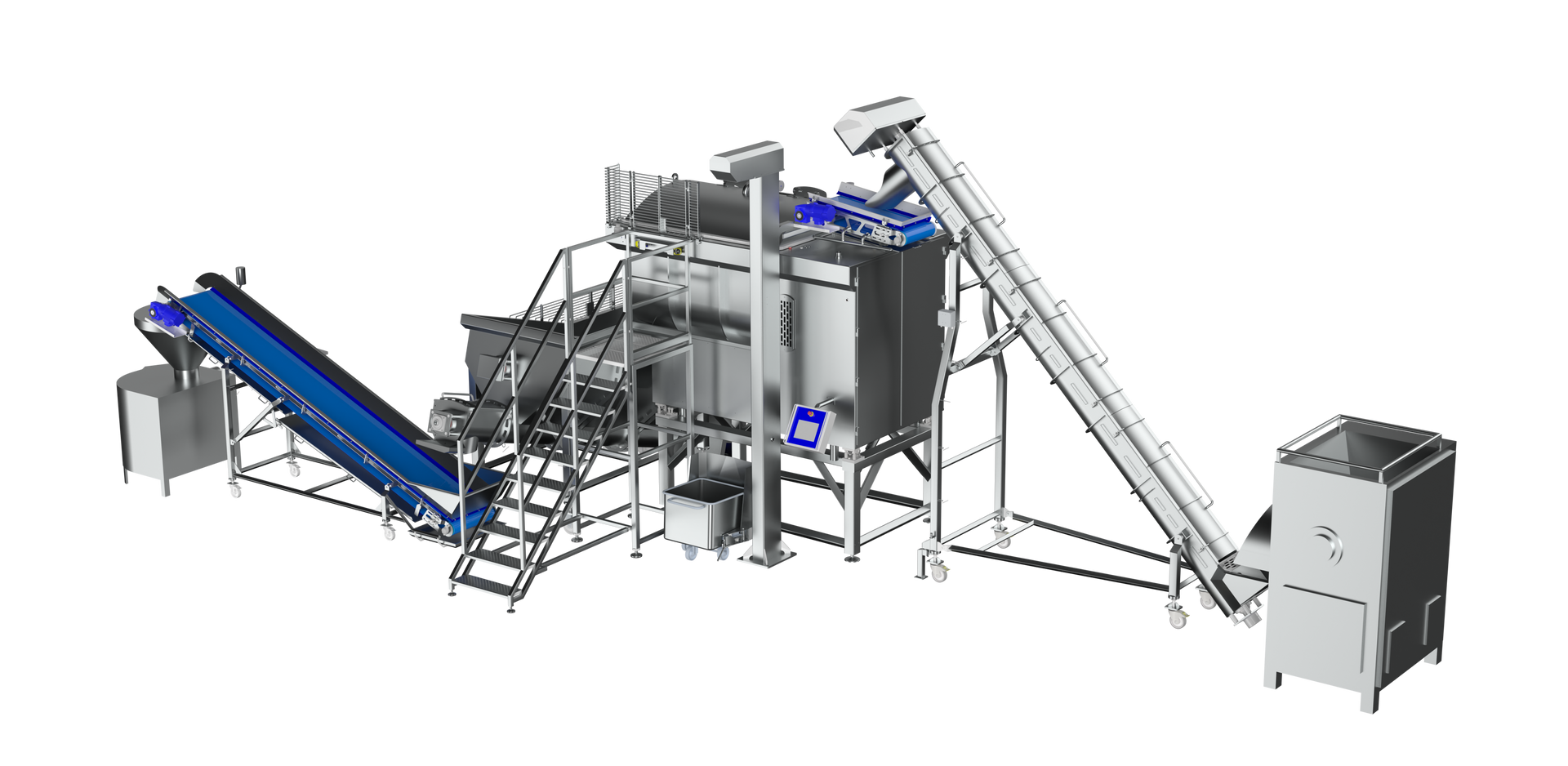
The design of mixing equipment directly affects process efficiency and product quality. Stainless steel construction is essential for sanitary design, making equipment easier to clean and maintain, which is crucial in food processing environments. Automation further enhances consistency and throughput by reducing manual intervention and ensuring repeatable results. Automated mixing lines from BAK Food Equipment, for example, streamline operations and help maintain strict hygiene standards while improving overall process efficiency.
Practical Tips for Consistency and Quality
How can processors improve mixing and blending consistency?
Consistency in mixing and blending is essential for delivering high-quality, repeatable products. Processors can improve consistency by carefully controlling key parameters such as time, speed, and temperature throughout the process. For mixing, processors likely want to keep their speed low for a gentle mix and to avoid product degradation. For blending, which involves creating a new, homogenous product, processor should consider a higher speed to facilitate the thorough combination of ingredients. Using versatile mixers (blenders), like those offered by BAK Food Equipment, allows processors to tailor the process to the specific needs of their ingredients and desired outcomes.
What best practices ensure product stability and repeatable results?
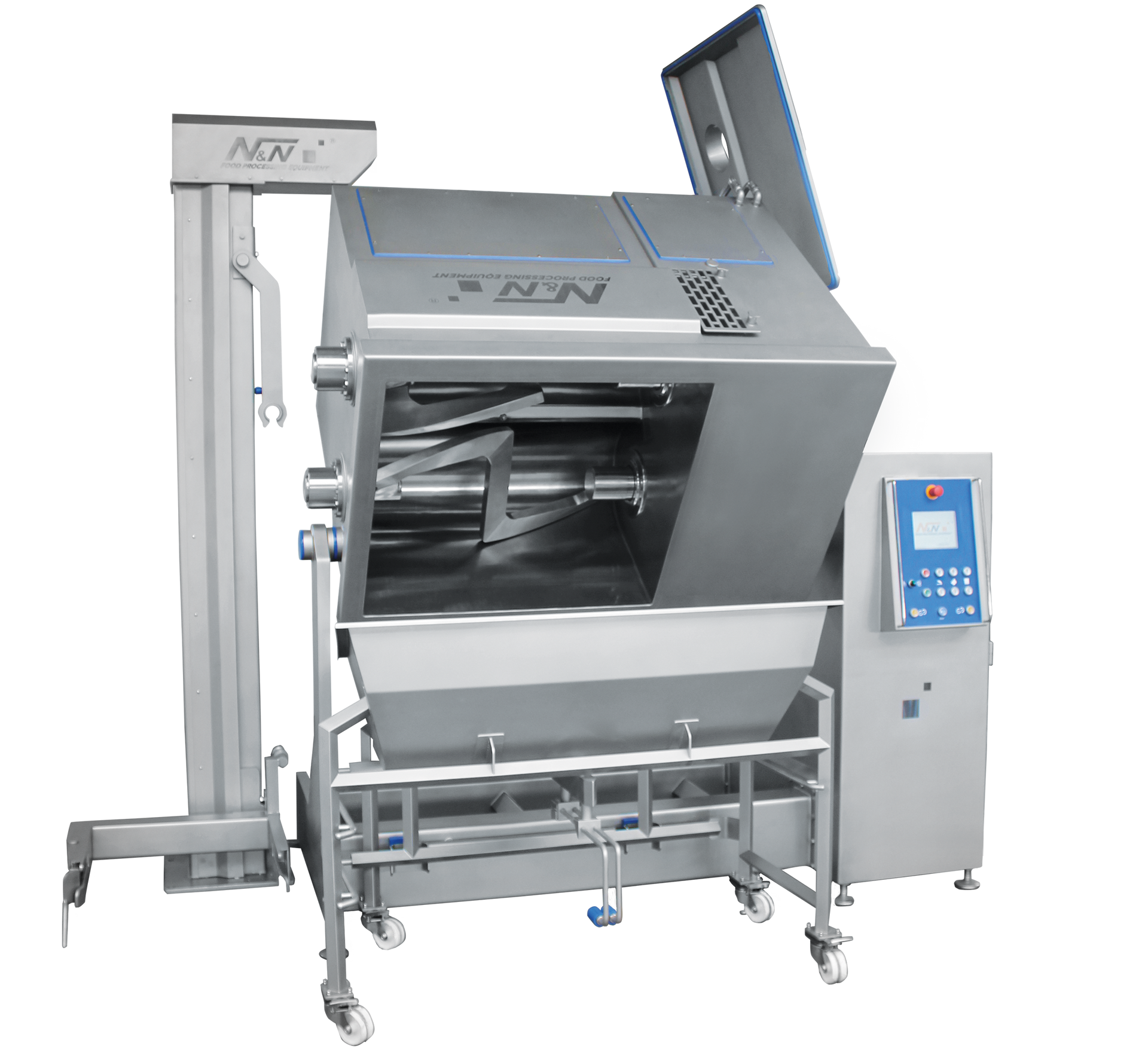
To ensure product stability and repeatable results, processors should implement rigorous quality checks at every stage. This includes verifying ingredient quality before processing, monitoring the process for uniformity, and conducting post-process inspections for texture and appearance. Ingredient preparation can prevent issues like clumping or separation. BAK mixers (blenders) are designed with touch-screen control panels where operators can create and save custom recipes to ensure repeatability from batch to batch. Periodic maintenance of mixing equipment also helps in maintaining process optimization and texture control. Documenting process parameters and outcomes helps establish a baseline for troubleshooting and continuous improvement.
How can improper processing affect yield or quality?
Improper mixing or blending can lead to a range of quality issues, including uneven texture, ingredient separation, or reduced yield. For example, insufficient mixing time or incorrect speed may result in clumping or incomplete distribution of ingredients, while excessive mixing can damage ingredient structure or cause over-processing. Temperature control is also vital; overheating can degrade sensitive ingredients, while inadequate temperature may prevent proper blending. These issues not only affect product quality but can also lead to increased waste and reduced profitability. By focusing on quality assurance and troubleshooting common problems, processors can maintain high standards and consistent results.
Applications Across Food Categories
How are mixing and blending used in different segments of food manufacturing?
Mixing and blending are essential processes across the food industry, each serving distinct roles depending on the product category. Mixing is defined as combining ingredients so they are evenly distributed and keep their particle definition. This is crucial in applications where maintaining the integrity of individual components is important. Blending, on the other hand, involves creating a new product by combining multiple ingredients into a homogenous product, which is vital for achieving consistent flavor and texture.
In meat processing, mixing is used for even seasoning distribution, ensuring that every portion of the product has the same taste and texture. Blending is also critical in forming homogenous meat emulsions for products like hot dogs.
In sauce production, blending is essential for achieving a smooth, stable texture. Proper blending ensures that oil, water, and seasonings are fully combined, preventing separation and delivering a high-quality finished product.
What are examples of products that depend on precise processing?
Many food products rely on precise mixing and blending to meet quality standards. In meat and poultry, products like sausages, and meatballs require exact protein extraction and seasoning distribution. In bakery, bread, cakes, and cookies depend on uniform dough and batter development. Spice blends, such as taco seasoning or curry powder, require homogenous mixing to ensure flavor consistency. Sauces and dressings, including mayonnaise and vinaigrettes, depend on thorough blending for a smooth, appealing texture.
Mastering mixing and blending processes is critical for product success. Consistency, texture, and flavor all depend on the right equipment and techniques, making these processes foundational in food manufacturing.
Why Understanding Mixing and Blending Matters in Modern Food Production
Why is understanding mixing vs blending critical for consistent production?
In food processing, knowing the difference between mixing and blending is essential for achieving consistent product quality. Mixing is combining ingredients so they are evenly distributed and keep their particle definition, while blending is creating a new product by combining multiple ingredients into a homogenous product. Each process has distinct applications: mixing is ideal when you want to maintain the integrity of individual components, such as in salads or granola, whereas blending is used when a uniform texture and composition are required, such as in sauces or doughs. Mastering these techniques ensures that every batch meets the same standards for taste, texture, and appearance, which is critical for brand reputation and customer satisfaction.
How can process control and equipment choice improve outcomes?
Selecting the right equipment and maintaining precise process control are key to optimizing both mixing and blending. Advanced mixers, like those offered by BAK Food Equipment, are designed to handle a wide range of processing needs, from gentle mixing of delicate ingredients to intensive blending for homogenous products. Automated controls allow operators to fine-tune speed, duration, and energy input, ensuring that each process is tailored to the specific requirements of the recipe. This not only improves production efficiency but also enhances texture control and reduces waste, leading to more reliable outcomes and lower operational costs. For more information on equipment options, visit our page on Industrial Food Mixers.
What innovations are shaping the future of mixing and blending?
The future of mixing and blending in food production is being shaped by innovations in automation, energy efficiency, and data-driven process control. Automated production lines now integrate real-time monitoring and feedback systems, allowing for immediate adjustments to maintain optimal conditions. Energy-efficient motors and smart controls reduce power consumption without compromising performance. Additionally, data analytics are increasingly used to track batch consistency and identify areas for process improvement. These advancements not only support higher production efficiency but also enable manufacturers to respond quickly to changing market demands and regulatory requirements. As the industry evolves, staying informed about process innovation is crucial for maintaining a competitive edge.
